Standing Together for Our Health, Our Homes, and Our Future
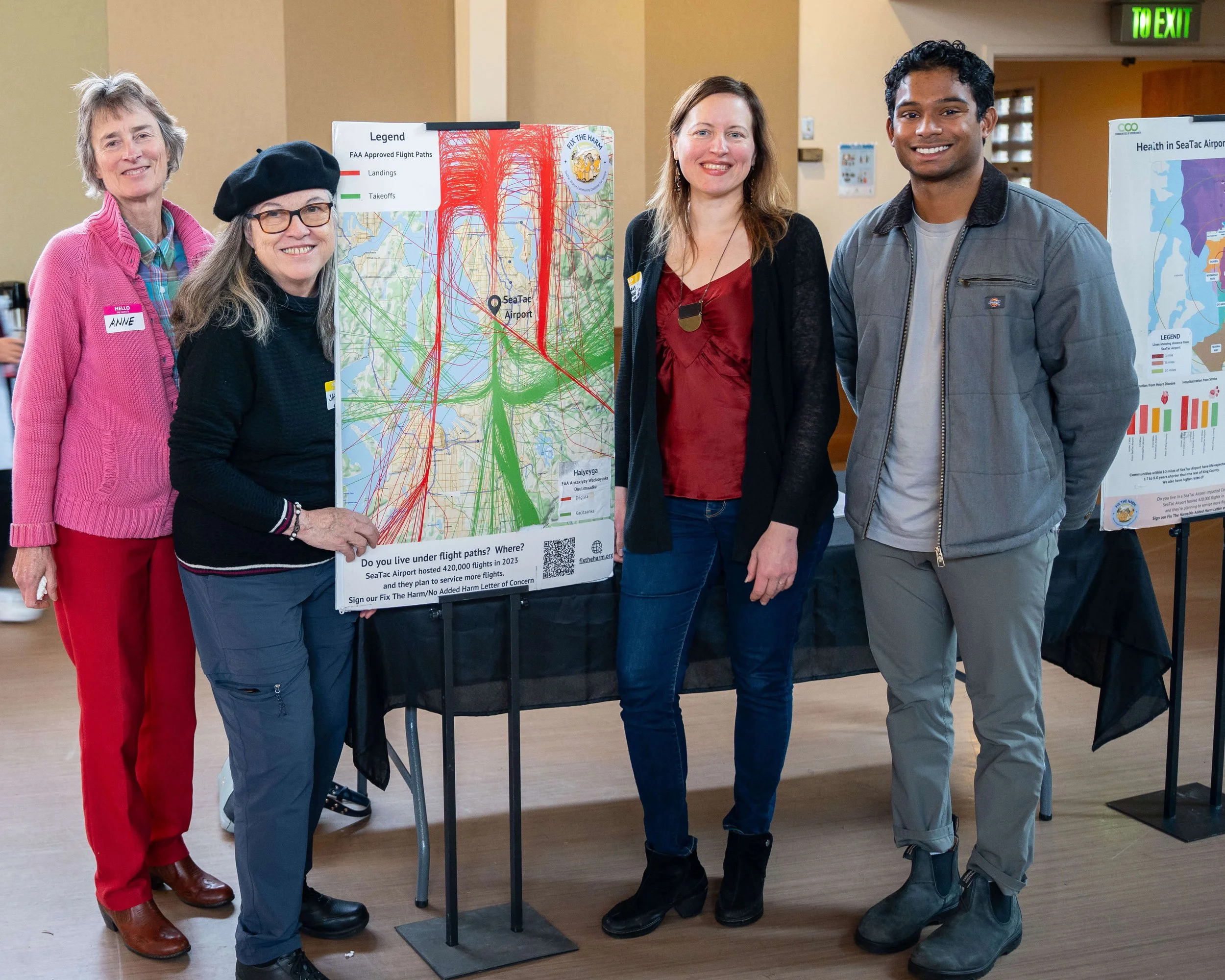
SeaTac Airports Community Coalition for Justice (STACC4J) brings together residents, grassroots leaders, and partners to raise awareness and advocate for equitable solutions to the health, environmental, and climate impacts of living in airport impacted communities.
For too long, people living in airport-impacted communities have shouldered the noise, air pollution, traffic, and health harms of airport growth. We see that the benefits of air cargo and jet travel go to people living far removed from airport harms while decisions affecting our daily lives are made without our voice. Our coalition formed from groups fighting to flip this dynamic and change the outcomes.
Our Vision: Healthy Airports and Healthy Workers
We organize residents, build partnerships, and demand accountability from the institutions shaping life around our airports. Through public forums, community education, and accountability tools, we turn lived experience into concrete action. Now we’re building toward real wins: healthier air, stronger neighborhood protections, transparent decision-making, and long-term investments shaped by the people most affected.
What Airport Operations Cost Our Communities
Airport-impacted neighborhoods carry cumulative burdens that too often go untracked, unmitigated, and ignored in public decision-making. These harms don't exist in isolation—they add up. We experience noise, pollution, heat, and economic pressure simultaneously, with little power to shape the systems causing harm.
Health
The airport affects our bodies and minds every day.
Health Impacts
Lifespans are 1.7 to 5 years shorter if you live close to SeaTac Airport. Heart disease, strokes, diabetes, asthma, and premature birth are all more common closer to the airport.
Noise & Well-Being
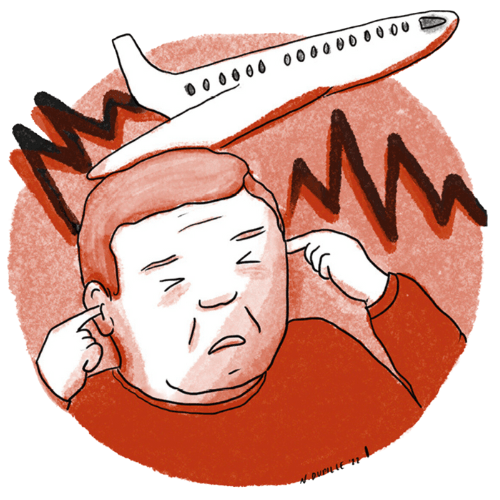
Constant aircraft noise disrupts sleep, raises stress hormones, affects children's learning, and is linked to cardiovascular disease–even if we think we’ve tuned it out. Families can’t open windows, hold conversations outdoors, or escape the din even inside their homes.
Air Pollution & Illness
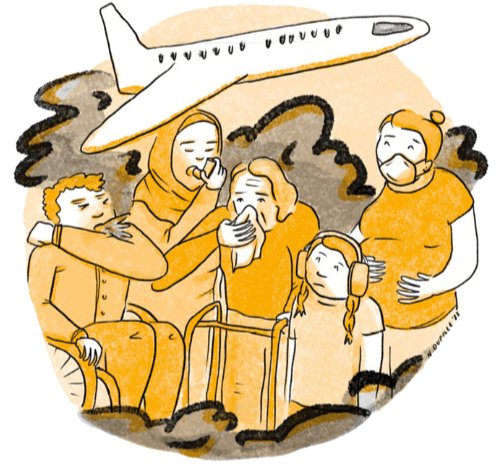
Ultrafine particles (pm2.5) from aircraft engines, freight/truck traffic, and warehouse operations penetrate deep into lungs and bloodstreams. Children in our neighborhoods experience higher asthma rates. Long-term exposure is linked to heart disease, strokes, diabetes, and premature death.

Environment & Climate
Our neighborhoods bear the environmental costs of airport growth.
Toxic Air & Environmental Health
According to the EPA, people exposed to toxic air pollutants at sufficient concentrations and durations may have an increased chance of getting cancer or experiencing other serious health effects.
Heat Islands & Lost Tree Canopy
Tree canopy has been stripped for runways, roads, and development, leaving neighborhoods hotter and more vulnerable during heat waves. Pavement and concrete radiate heat while wealthier areas stay cooler and less polluted under mature trees.
Climate
SeaTac air traffic produces dangerous levels of air pollutants that contribute to the warming of the atmosphere. Aviation emissions were responsible for 15% of King County’s total emissions.
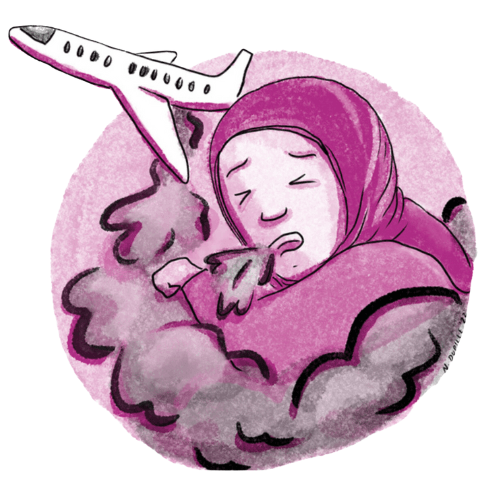
EQUITY
Harms are not shared equally.
Who Is Most Affected
Residents impacted by SeaTac and municipal airport flights are mostly people of color (64%) and immigrants and refugees (29%).
Housing & Displacement Pressure
As warehouses expand and neighborhoods change, longtime residents face rising rents, property pressures, and displacement. Families who have lived here for generations and invested their lives into their homes are being pushed out.
Economic Barriers & Exclusion
Airport-related jobs and contracts too often bypass the communities closest to operations. Confusing grant processes, credential requirements, and bundled contracts lock out small, BIPOC-owned businesses and grassroots organizations.
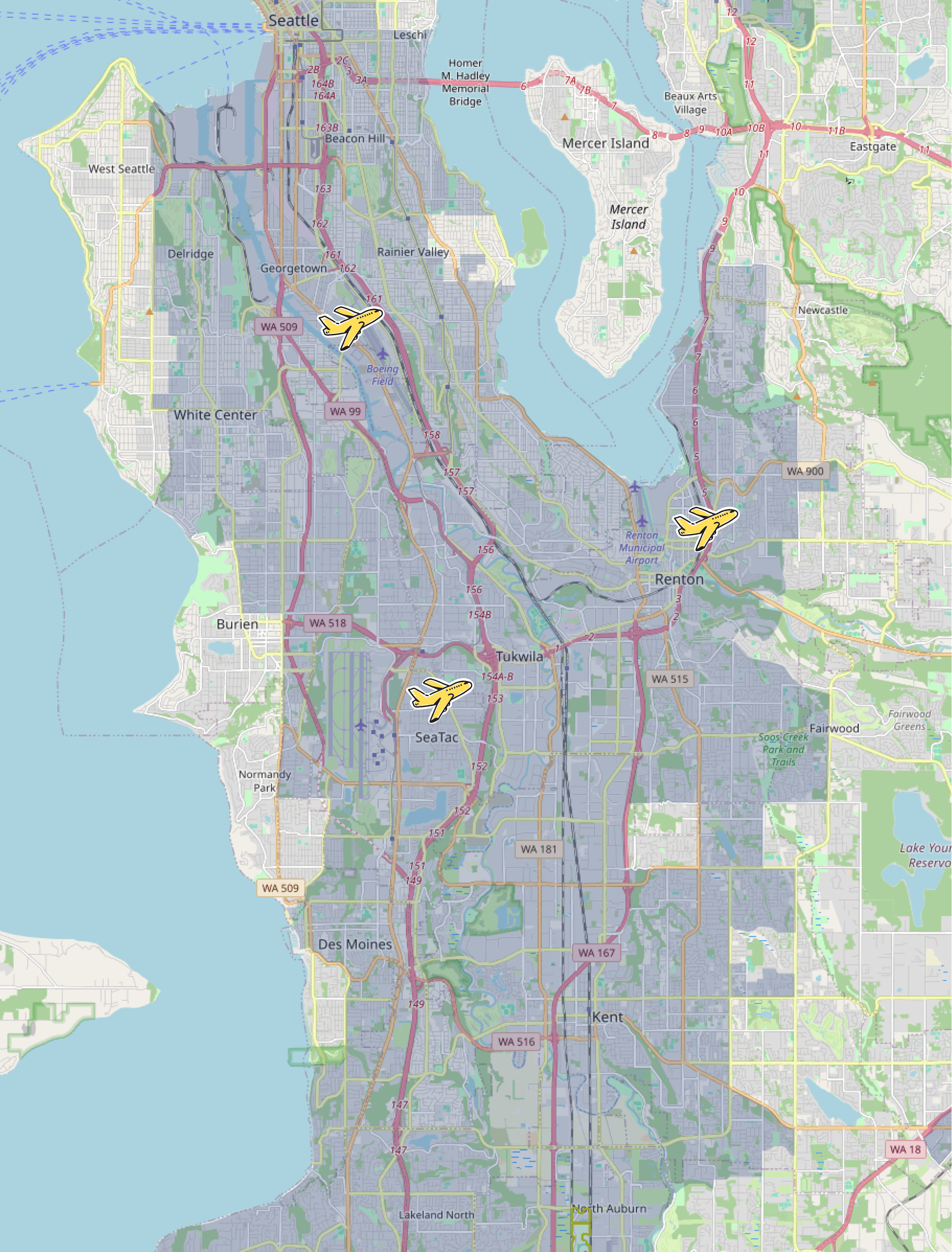
Do you live in an affected area?
Our overburdened communities are those with a combination of poorer health outcomes, more air pollution sources, and whose residents face socio-economic barriers to participation in clean air decisions and solutions.
To identify our overburdened communities, we combined information from multiple trusted sources, including our own Community Air Tool, Washington State’s Environmental Health Disparities Map, Washington State Department of Ecology’s Overburdened Communities, and EPA’s Environmental Justice Screening and Mapping Tool.
Where do you live on this map?