
What Airport Operations Cost Our Communities
Airport‑affected neighborhoods face cumulative impacts of noise and air pollution, heat, traffic, and economic pressure. These harms don’t exist in isolation—over time, they add up and contribute to health disparities, stress and mental health strain, housing and economic insecurity. So, while we experience them all at the same time, our experiences are often ignored in public decisions that could reduce or mitigate harm. Strong SEPA comments are one way for airport‑impacted communities to be seen, heard, and counted in those decisions.
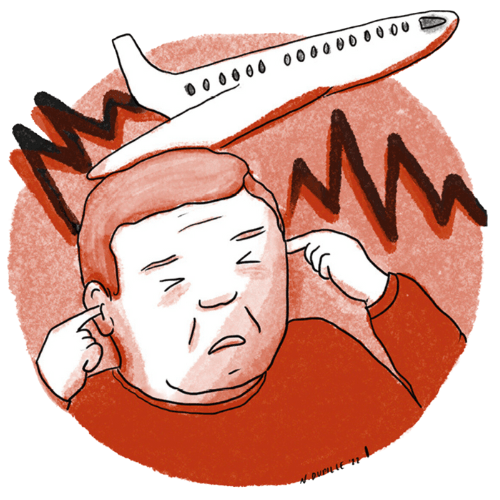
Health Harms
Breathing Polluted Air
Living near airports and freight routes is linked to higher rates of asthma in children—up to eight times higher in some warehousing areas—and to increased early death compared to less‑impacted neighborhoods. Residents describe trouble breathing during busy flight periods and on hot days when pollution stays close to the ground.
Sleep, Learning, and Mental Health
Chronic noise from flights and trucks disrupts sleep, which in turn affects cardiovascular health, learning, and mental health. Children exposed to constant noise have more difficulty concentrating in school, and adults report stress, anxiety, and fatigue from never‑ending noise, pollution alerts, and uncertainty about future expansion.
Combined Health Impacts
These harms do not happen one at a time. Heat, air pollution, noise, and stress combine to create strong health risks and big differences in health outcomes between airport‑impacted neighborhoods and the rest of King County.

Environmental & Climate Harms
SeaTac and other regional airports power Washington’s economy, but nearby neighborhoods pay the highest price. People who live close to the airport face overlapping harms: toxic air pollution, constant noise, hotter streets, tree loss, and climate-warming emissions from flights and freight. These harms fall hardest on BIPOC, immigrant, and low‑income residents who already face health and economic challenges.
Toxic Air Pollution
Aircraft, ground support equipment, and ever‑growing freight traffic release fine particulates (PM2.5 and ultrafine particles), nitrogen oxides, and other pollutants into the air we breathe. In neighborhoods around SeaTac, PM2.5 and ultrafine particles have been measured above health guidelines, and are linked to higher rates of asthma, heart disease, and premature death than in less‑impacted areas.
Noise That Disrupts Daily Life
Frequent flights and heavy truck traffic create loud noise during the day and at night–average daytime noise levels reach above 65 decibels—loud enough to disturb sleep, learning, and mental health. Children in flight paths struggle to hear teachers, elders lose quiet rest, and residents report constant stress from aircraft and traffic noise layered on top of each other.
Urban Heat Islands Around the Airport
Large paved areas, warehouses, and parking lots, combined with low tree cover, create strong heat islands near the airport. These areas are hotter, with more heat stress, more heat‑related medical emergencies, and more smog that worsens asthma and other lung diseases, especially for medically vulnerable residents.
Tree loss and shrinking green space
Even as heat and pollution rise, mature trees are being cut down to make way for runways, roads, and warehousing. Research shows mature trees are irreplaceable shields against air toxins, noise, and urban heat; they cannot be quickly replaced by saplings that take decades to grow. Tree loss is especially harmful in over-burdened neighborhoods where shade, clean air, and quiet are already scarce.
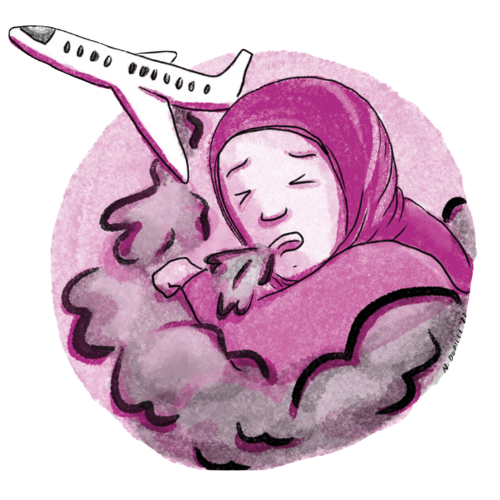
Equity Harms
Unequal Impacts
Communities like SeaTac, Burien, Tukwila, Kent, and Renton experience the heaviest mix of noise, pollution, traffic, heat, and tree loss, even as the economic benefits of air travel and freight are spread across the whole region. BIPOC and immigrant residents are more likely to live under flight paths, near warehouses, or along busy freight routes, yet often have the least access to health care, political power, or financial resources to adapt.
Displacement and Loss of Culture
As roads widen and warehouse districts expand, property prices rise, housing costs rise and affordable homes decline. Families that have lived for generations near the airport are being squeezed and pushed out by rising rents, speculative development, and land is converted from housing and green space into logistics and airport‑related development.
Lack of Decision‑Making Power
Residents repeatedly testify but say their lived experience rarely shapes airport decisions. Community advisory bodies and public comment periods exist, but without clear public tracking or timelines, people cannot see how their input affects outcomes. At all.
Why This Matters
No More “Not Our Department”
Different agencies—the Port, WSDOT, cities, and state and federal regulators—control different pieces of the problem. This “buck‑passing” means no single entity is accountable for the cumulative impacts of flights, freight, tree removal, and climate emissions on frontline communities
Environmental Justice
Washington’s Healthy Environment for All (HEAL) Act requires state agencies to identify overburdened communities and track progress through public dashboards. Airport‑impacted neighborhoods clearly meet this definition, but change on the ground has not matched the scale of the harms.
Environmental Justice in Law and Practice
Washington’s Healthy Environment for All (HEAL) Act requires state agencies to identify overburdened communities and track progress through public dashboards, and prioritize mitigation in those neighborhoods. Airport‑impacted neighborhoods clearly meet the definition, but change on the ground has not matched the scale of the harms.
Our Call to Action
Airport expansion and logistics growth cannot continue to rely on the sacrifice of the same neighborhoods.
We are organizing for policies that:
Reduce air and climate pollution in airports‑impacted neighborhoods.
Protect existing trees and expand canopy, especially in the hottest, most exposed areas.
Prevent displacement and preserve affordable housing near the airport.
Require cleaner, zero‑emission freight and climate‑smart infrastructure near homes and schools.
Give directly impacted residents real power and clear information in all major airport and freight decisions.